Hydro Dynamic Separators
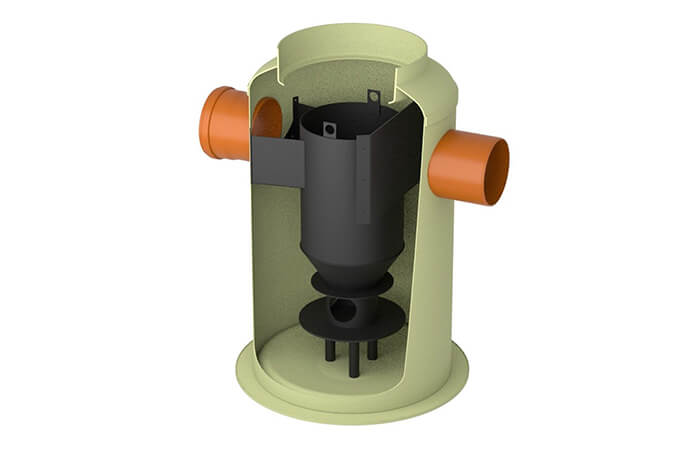

Hydrodynamic Separators are engineered stormwater treatment devices designed to remove sediments, suspended solids, debris, oils, and floating pollutants from runoff water before discharge into drainage networks or natural water bodies. Flomax Pump Trading L.L.C supplies high-performance hydrodynamic separator systems that provide effective first-flush treatment, reduce pollutant loads, and support compliance with environmental and authority requirements.
These systems are widely adopted in urban, infrastructure, and commercial developments where space is limited and reliable stormwater treatment is essential.
A hydrodynamic separator is a stormwater treatment unit that uses controlled vortex flow, gravity separation, and hydraulic forces to remove pollutants from runoff water. As water enters the unit, rotational flow is created, allowing heavier sediments to settle while oils, trash, and floatables are separated and retained within the chamber.
Unlike conventional sediment traps, hydrodynamic separators are compact, efficient, and capable of treating high flow rates without significant head loss.
Urban stormwater runoff often carries contaminants such as sand, silt, hydrocarbons, litter, and organic matter. Without treatment, these pollutants can cause:
Hydrodynamic separators provide a practical and efficient solution to intercept pollutants at the source.
Flomax hydrodynamic separators are suitable for a wide range of applications, including:
These systems are particularly effective in areas with high sediment loads and frequent storm events.
Hydrodynamic separators operate using a combination of hydraulic principles:
This process ensures efficient pollutant removal even during variable flow conditions.
Hydrodynamic separators effectively remove sediments, hydrocarbons, trash, and debris from stormwater runoff.
The compact design allows installation in confined urban spaces where traditional treatment systems are impractical.
Hydraulic design minimizes head loss, ensuring smooth integration with existing drainage networks.
Systems operate without external power, relying on gravity and flow energy, reducing operational complexity.
Large sediment storage capacity reduces the frequency of cleaning compared to conventional catch pits.
By removing pollutants upstream, hydrodynamic separators reduce wear and blockage in downstream pipes and treatment systems.
Flomax hydrodynamic separators are supplied as pre-engineered units, typically constructed from durable materials such as:
Materials are selected based on load conditions, installation depth, and environmental exposure, ensuring long service life and structural integrity.
Hydrodynamic separators are often used as part of a comprehensive stormwater management strategy, integrated with:
This integrated approach enhances overall system performance and environmental protection.
Flomax hydrodynamic separators are designed with easy access covers to facilitate inspection, sediment removal, and routine maintenance.
Proper maintenance ensures:
Maintenance intervals depend on site conditions and pollutant load but are generally less frequent than conventional sediment traps.
By capturing pollutants before they enter natural water bodies, hydrodynamic separators play a critical role in environmental protection. They help improve water quality, reduce sedimentation in rivers and canals, and support sustainable urban development.
These systems are especially valuable in meeting modern environmental objectives and stormwater quality guidelines.
Hydrodynamic separators supplied by Flomax are selected to comply with international stormwater treatment standards and local authority requirements. Their proven performance and compact design make them widely accepted by consultants, municipalities, and regulatory bodies.
Flomax follows an engineering-based approach when specifying hydrodynamic separators. Selection criteria include:
This ensures each system is appropriately sized and performs effectively under real operating conditions.
Flomax hydrodynamic separators provide a dependable solution for managing stormwater quality in challenging urban environments.
As regulatory requirements and environmental awareness continue to increase, effective stormwater treatment is no longer optional. Flomax hydrodynamic separators deliver a practical, efficient, and proven solution for protecting drainage infrastructure and the environment.
By selecting Flomax hydrodynamic separator systems, projects benefit from enhanced water quality, reduced environmental impact, and long-term system performance.